
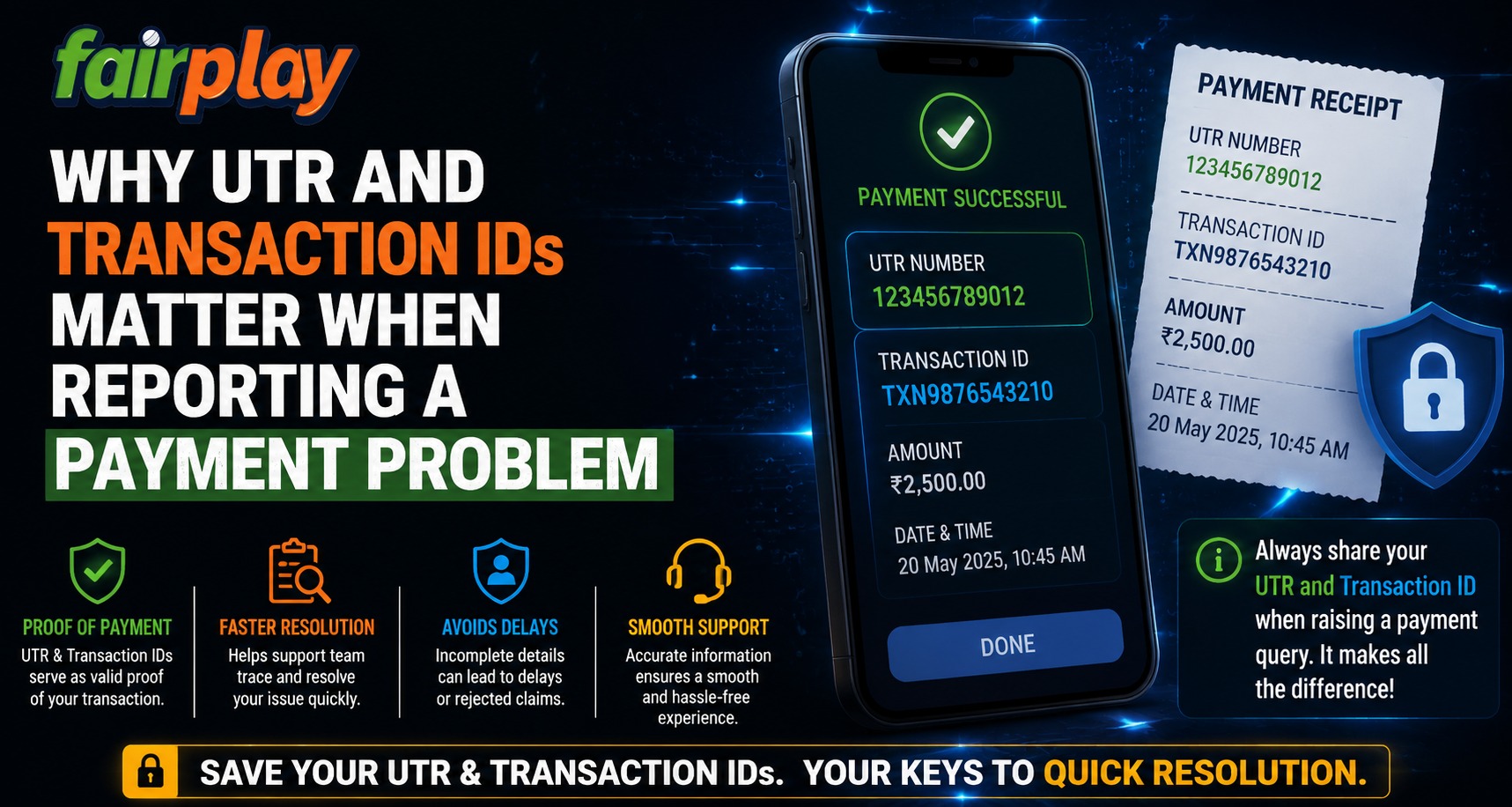
Digital payments have become a common part of online platforms, making quick and secure transactions possible. However, payment issues such as pending transfers, failed deposits, or delayed confirmations can sometimes occur. In these situations, transaction references play an important role in helping support teams identify and resolve problems. Fairplay24 users should understand why details like UTR numbers and transaction IDs are important when reporting payment-related concerns.
Providing accurate transaction information allows support teams to locate payment records faster and offer better assistance. Without proper details, identifying a specific payment can become more difficult and may increase the time required to resolve an issue.
What Is a UTR Number?
UTR stands for Unique Transaction Reference number. It is a specific reference code generated for certain banking transactions, especially those processed through banking networks.
A UTR helps identify:
- A specific payment transfer
- Transaction history details
- Processing records
- Payment status information
Because each transaction receives a unique reference, the UTR works like an identification number for tracking payment movement.
What Is a Transaction ID?
A transaction ID is another reference number associated with a payment. It is usually generated by a payment system, bank, or digital service provider to identify a specific transaction.
A transaction ID may contain information related to:
- Payment attempts
- Processing status
- Confirmation records
- Transfer details
Different payment methods may use different types of transaction references.
Difference Between UTR and Transaction ID
Although both numbers help identify payments, they are not always the same.
The main differences include:
UTR Number
- Usually connected with banking transactions
- Helps track money transfers through financial networks
- Often provided after successful processing
- Used for payment verification
Transaction ID
- Generated by a payment platform or service
- Helps identify a specific payment activity
- May appear immediately after initiating a transaction
- Used for internal tracking
Understanding the difference helps users provide the correct information when requesting support.
Why These IDs Are Important During Payment Issues
When users report a payment problem, support teams need specific details to locate the transaction quickly.
Important information may include:
- Transaction ID
- UTR number (if available)
- Payment date and time
- Transaction amount
- Payment method
- Current status
Without these details, support teams may need additional information before investigating the issue.
Common Payment Problems Where IDs Help
Transaction references are useful in several situations.
Pending Payments
Sometimes a payment remains pending for longer than expected. A transaction ID helps identify the payment status.
Failed Transactions
If money is deducted but the payment does not complete, transaction details help confirm what happened.
Delayed Confirmation
A payment may be completed by the bank but not immediately updated on the platform. Reference numbers help match records.
Incorrect Payment Status
In rare cases, displayed payment information may not match actual processing details. Transaction references help verify the correct status.
How to Find Your Transaction Details
Users can usually find transaction information through:
- Bank statements
- Payment confirmation messages
- Transaction history pages
- Payment application records
Before contacting support, users should collect all relevant details to explain the issue clearly.
Users accessing their accounts through Fairplay24 Login should keep transaction information available when reporting payment concerns.
What Information Should Not Be Shared Publicly?
While transaction details are useful for support, users should avoid sharing sensitive information publicly.
Do not share:
- Passwords
- OTP codes
- PIN numbers
- Complete banking credentials
- Personal security information
Only provide necessary transaction details through trusted support channels.
How to Report a Payment Problem Effectively
A clear support request helps reduce confusion and improves response time.
A useful payment complaint should include:
- Description of the issue
- Transaction date and time
- Payment method used
- Transaction ID or UTR number
- Screenshot of payment confirmation if required
Providing complete information allows support teams to review the case more efficiently.
How Digital Payment Systems Improve Tracking
Modern payment systems use automated tracking methods to improve accuracy. Transaction references help connect different stages of a payment process.
These systems support:
- Faster verification
- Better record management
- Improved payment transparency
- Easier issue resolution
Through features available on the Fairplay24 App, users can manage digital interactions more efficiently and keep track of important account activities.
Understanding Payment Records Through Fairplay24
Payment records provide important information about transaction status and history. Users exploring Fairplay Com should understand that keeping transaction references safe and organised can make future support requests easier.
Knowing how UTR numbers and transaction IDs work helps users communicate payment issues clearly and avoid unnecessary delays.
Conclusion
UTR numbers and transaction IDs are essential tools for identifying and resolving payment-related problems. They allow support teams to locate specific transactions, verify payment details, and provide accurate assistance.
By keeping transaction information organised, avoiding the sharing of sensitive details, and providing complete payment references during support requests, users can make payment issue resolution smoother and more efficient.
FAQs
What is a UTR number?
A UTR number is a unique reference code used to identify certain banking transactions and help track payment records.
Is a transaction ID the same as a UTR number?
No. A transaction ID and UTR number both identify payments but may be generated by different systems.
Why do support teams ask for transaction IDs?
Transaction IDs help support teams locate specific payment records and investigate issues faster.
Where can I find my transaction ID?
Transaction IDs can usually be found in payment confirmations, transaction history, or banking records.
Should I share my UTR number publicly?
No. Transaction references should only be shared with trusted support channels when required.
What details should I provide when reporting a payment issue?
Provide the transaction reference, payment time, amount, payment method, and a clear explanation of the issue.