
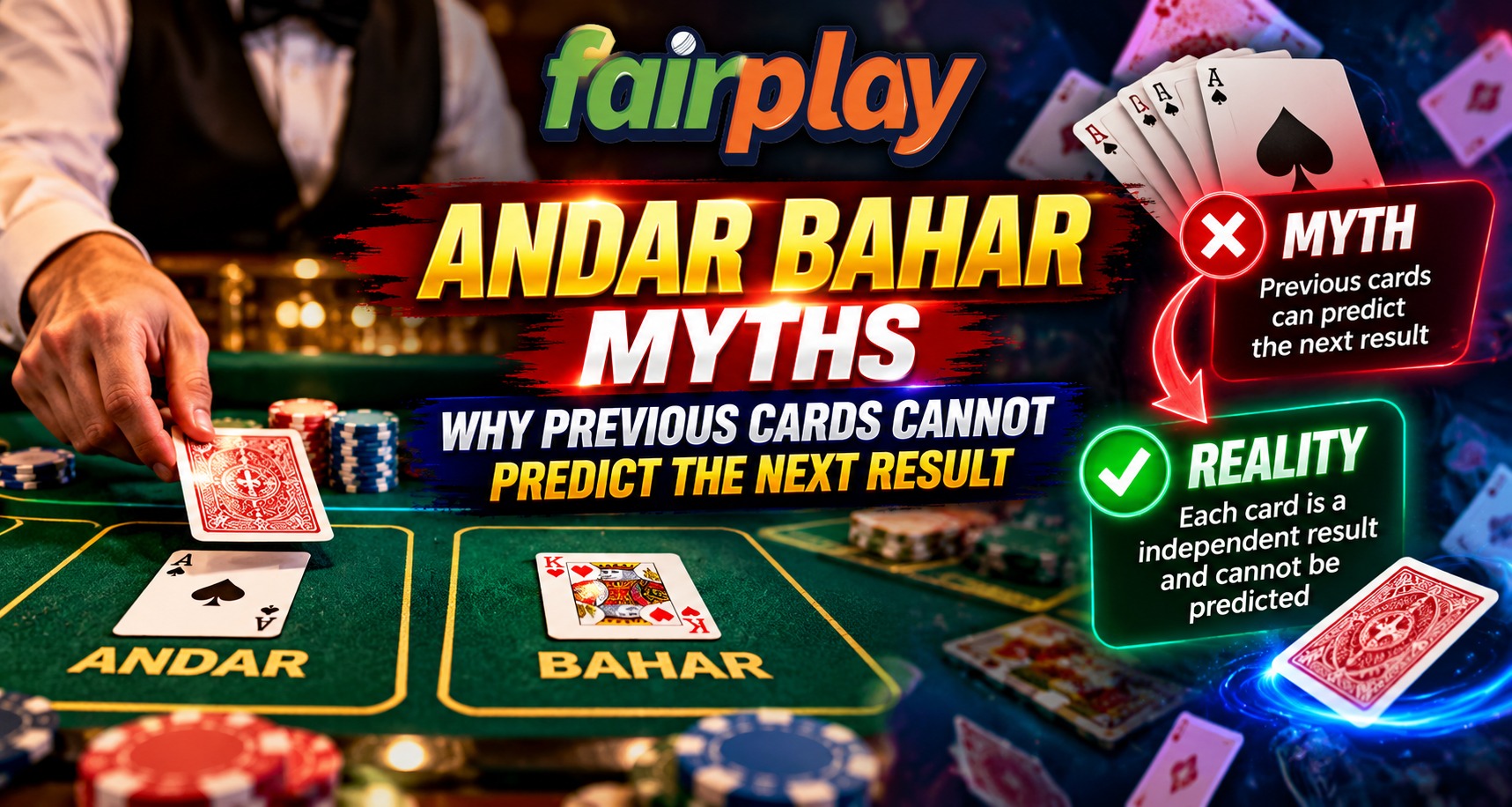
A row of repeated Andar or Bahar results can look like a clue, but a visible pattern is not a reliable forecast. Whether you use the Fairplay app or access an account through Fairplay login, understanding how rounds are reset matters more than reading a history strip. When a complete deck is properly reshuffled for each round, earlier results do not make either side due to win.
What Actually Determines an Andar Bahar Result?
The game begins with a middle card, often called the house card. Cards are then dealt alternately to Andar and Bahar until one matches its rank. That side wins the main game.
The current shuffled order determines where the matching card appears. A previous round’s winner does not direct the next deal. However, starting side rules and payouts can vary between versions, so the applicable table instructions remain important.
Myth One: A Losing Side Must Win Soon
Suppose Bahar wins four consecutive rounds. It can feel reasonable to expect Andar next because the results seem unbalanced.
That expectation is the gambler’s fallacy: assuming independent outcomes must correct a recent sequence. A properly reshuffled round does not compensate for what happened earlier.
Longer sequences need not balance immediately. Equally, a winning streak does not establish that the same side will keep winning.
Myth Two: Remembering Old Cards Reveals the Next Winner
There is an important distinction between separate rounds and cards within one round. Within a single deck, cards are drawn without replacement, so each revealed card changes what remains.
After the full deck is restored and properly shuffled, that information does not carry into the next round. Old cards do not reveal a new shuffled order.
Some variants allow additional betting during a deal. Those decisions follow the current round’s rules and remaining cards, rather than patterns from completed rounds. Even then, changing probabilities do not guarantee a result.
Myth Three: Two Sides Always Mean Equal Chances
At Fairplay24, we believe useful explanations should distinguish simple gameplay from assumptions about probability. Readers using the Fairplay app after Fairplay com should check the starting side, payout schedule, shuffle procedure and any optional bets.
Two choices do not automatically mean identical winning chances or identical returns. Dealing order can affect the main game’s probabilities, while different payouts affect its expected cost. Knowing the rules is more useful than guessing from recent winners.
Clear Rules Make the Experience Easier to Understand
Quality game information explains what the history display records and what it cannot establish. It should also distinguish the main game from optional side bets, which may involve different winning conditions.
This clarity makes an unfamiliar table more comfortable to assess. On mobile or desktop, understandable labels and accessible rules support ease of use and a better customer experience. Customers increasingly expect explanations that help them evaluate claims.
Read More :
Thoughtful Decisions Have More Value Than Pattern Chasing
Decide how much time and money you are willing to spend before starting. Repeatedly increasing a stake after losses does not improve the underlying chances and can quickly increase exposure.
A record of spending and time can be useful for reviewing personal habits. Its value lies in awareness, rather than forecasting cards. These principles remain useful across game versions as layouts or features change. Take a break if pattern chasing creates pressure to continue.
Read More : Fairplay App Mobile Access Guide: Security, Login and User Experience
Conclusion
Previous rounds cannot predict a new independently shuffled deal. At Fairplay24, we encourage readers using the Fairplay app and Fairplay login to understand the rules, question claims of certainty and keep decisions within personal limits. Clear expectations offer lasting value without treating past cards as promises.
FAQs
Does a losing streak make a win more likely?
Not in a new independently shuffled round.
Can a history display predict the next winner?
It records past results, rather than revealing the shuffled order.
Do cards within one round affect probabilities?
Yes. Dealt cards change the contents of the remaining deck.
Are Andar and Bahar always equally likely to win?
No. The dealing rules can create different probabilities.
Does increasing stakes after losses change the odds?
No. It increases exposure without improving the underlying chances.