
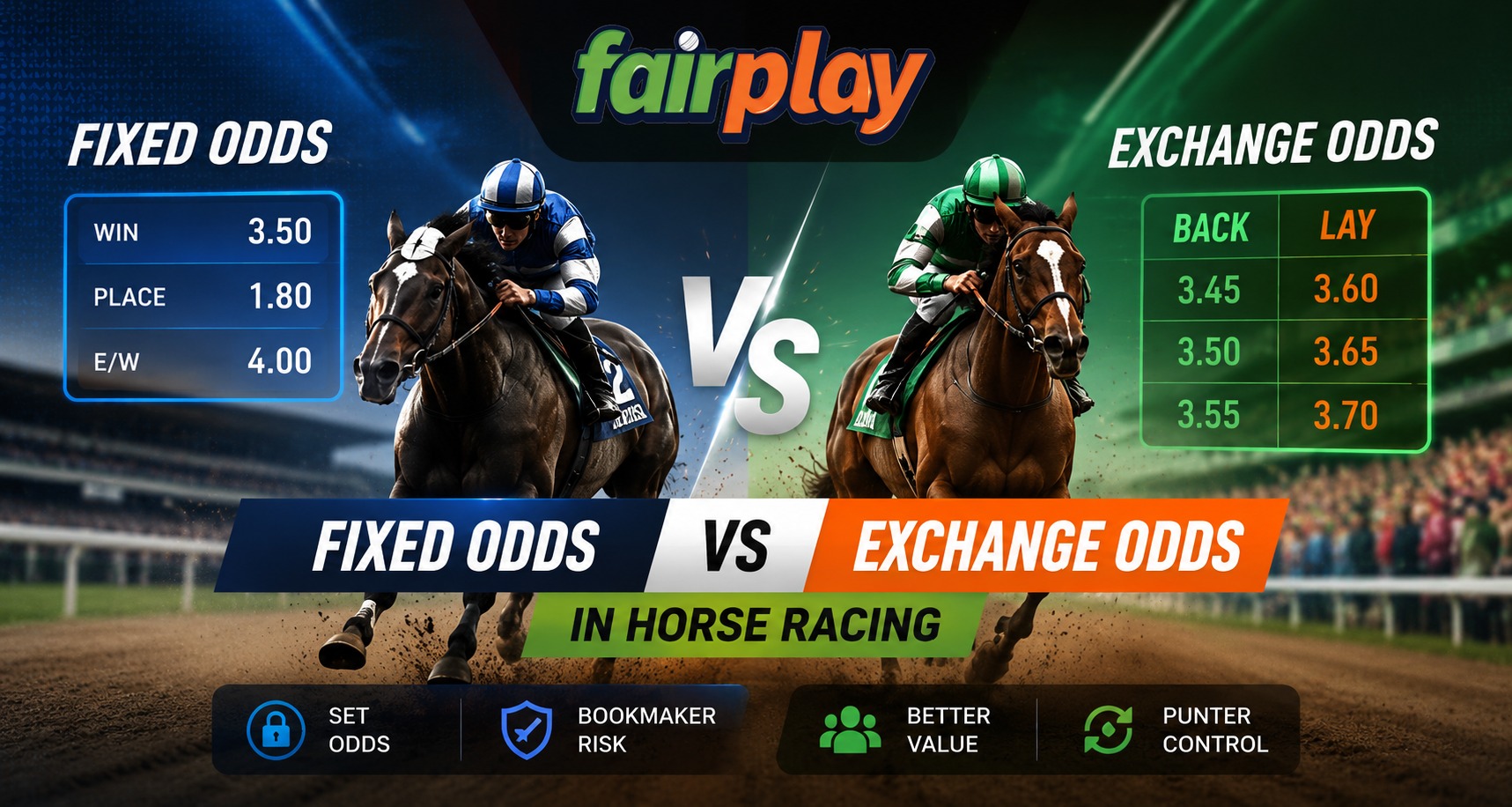
Horse racing markets can appear confusing for beginners because different formats use different pricing systems. Two of the most common approaches are fixed odds and exchange odds, each offering a different way to view race markets. For users exploring horse racing information through Fairplay24, understanding the difference between these two systems can make market structures easier to follow and help explain why prices may change in different ways.
What Are Fixed Odds in Horse Racing?
Fixed odds are a traditional format where a price is offered by a bookmaker before the race begins.
In this system:
- The bookmaker sets the odds.
- Users choose whether to accept the available price.
- The odds generally remain fixed after the selection is confirmed.
- The potential return is calculated based on the agreed price.
For example, if a horse is offered at a specific price and a user accepts those odds, the return is based on that original value regardless of later market movement.
What Are Exchange Odds?
Exchange odds work differently because prices are created through interaction between participants in a market.
Instead of betting against a bookmaker, users participate in a marketplace where different opinions and available prices meet.
Exchange markets usually include:
- Back prices
- Lay prices
- Available market amounts
- Changing price movements
- User-driven activity
Prices can move frequently because they depend on supply, demand, and market participation.
Users accessing information through Fairplay24 Login should understand that exchange-style markets operate differently from traditional fixed-price formats.
Key Difference Between Fixed Odds and Exchange Odds
The main difference is how prices are created.
Fixed odds:
- Controlled by a bookmaker
- Usually remain stable after acceptance
- Offer a simple selection process
- Do not involve direct market interaction
Exchange odds:
- Created by market participants
- Can change frequently
- Allow different market positions
- Depend on available liquidity
Both systems have different structures, and understanding these differences helps beginners read horse racing markets more clearly.
How Do Price Movements Work?
In fixed odds markets, prices are adjusted by the bookmaker based on factors such as:
- Public interest
- Horse form
- Weather conditions
- Market expectations
In exchange markets, prices change based on:
- Number of participants
- Available amounts
- New information
- Changing opinions
For example, if a popular horse receives strong market attention, exchange prices may move quickly as more participants enter the market.
Why Do Some Users Prefer Fixed Odds?
Fixed odds are popular because they are straightforward.
Advantages include:
- Easy-to-understand pricing
- Clear potential returns
- Simple selection process
- Less focus on market movement
Beginners often find fixed odds easier because they only need to choose a selection and accept the offered price.
Why Do Some Users Prefer Exchange Odds?
Exchange markets attract users who prefer a more market-based approach.
Potential advantages include:
- More flexible price options
- Ability to view market activity
- Different ways to analyse prices
- Greater focus on supply and demand
However, exchange markets may require a stronger understanding of concepts such as liquidity and price movement.
How Does Liquidity Affect Exchange Markets?
Liquidity refers to how much activity is available in a market.
A market with higher liquidity usually has:
- More available prices
- Easier matching of positions
- More stable price movement
Low liquidity markets may experience:
- Wider price differences
- Faster price changes
- Limited availability at certain prices
Understanding liquidity is important for anyone learning how exchange markets operate.
Which Format Is Better for Beginners?
There is no single answer because both formats have different characteristics.
Beginners may prefer fixed odds because:
- The process is simpler
- Prices are easier to understand
- Market concepts are less complex
Users interested in learning exchange markets may prefer exchange odds because they provide more insight into market behaviour.
The most important step is understanding how each system works before analysing any race.
Common Mistakes When Comparing Odds
New users often make mistakes when comparing fixed and exchange prices.
Common errors include:
- Looking only at the displayed price
- Ignoring market conditions
- Not understanding price movement
- Assuming higher odds always mean better value
A complete understanding requires looking at the entire market structure.
How Technology Has Changed Horse Racing Markets
Modern technology has made horse racing markets more accessible and interactive.
Users can now view:
- Real-time updates
- Price movements
- Market information
- Race details
Through platforms and mobile services such as the Fairplay24 App, users can access racing information more conveniently while learning how different market formats operate.
Choosing Between Fixed and Exchange Odds
The choice depends on personal preference and understanding of market systems.
Factors to consider include:
- Experience level
- Knowledge of market movement
- Interest in analysis
- Preferred level of simplicity
Beginners should focus on learning the basics rather than choosing a format based only on price.
Conclusion
Fixed odds and exchange odds represent two different ways of understanding horse racing markets. Fixed odds provide a simpler approach with bookmaker-set prices, while exchange odds operate through participant-driven markets with changing prices.
For users following horse racing information through Fairplay Com, understanding these differences can make market details easier to interpret. Learning how each system works helps create a clearer view of how horse racing prices are displayed and updated.
Frequently Asked Questions
What are fixed odds in horse racing?
Fixed odds are prices set by a bookmaker that determine the potential return when accepted.
What are exchange odds?
Exchange odds are market prices created through interaction between participants.
Which is easier for beginners?
Fixed odds are generally easier because the pricing structure is simpler.
Why do exchange odds change frequently?
Exchange prices change due to market activity, available amounts, and changing opinions.
What does liquidity mean in exchange markets?
Liquidity refers to the amount of available activity and money within a market.
Are fixed odds and exchange odds the same?
No. They use different pricing systems and operate through different market structures.